MMM
Results 1 to 25 of 66

Thread: Asus crippled ICH10 performance on their X58 boards.

Threaded View

  1. #11
    Xtreme Addict
    Join Date
    May 2008
    Location
    Land of Koalas and Wombats
    Posts
    1,058
    Quote Originally Posted by Chosen. View Post
    Very interesting information, I have spent the last 48 hours trying to figure out how things work inside my motherboard.
    Not because I have to (somebody who spends $300 for a new motherboard expects steps forwards, not backwards), but because I spend my time in my pc more than just playing games.


    I don't know about this, I have seen higher transfer rates on the ICH family, like for example the half Gb/sec that a pair of X25-E's can achieve:
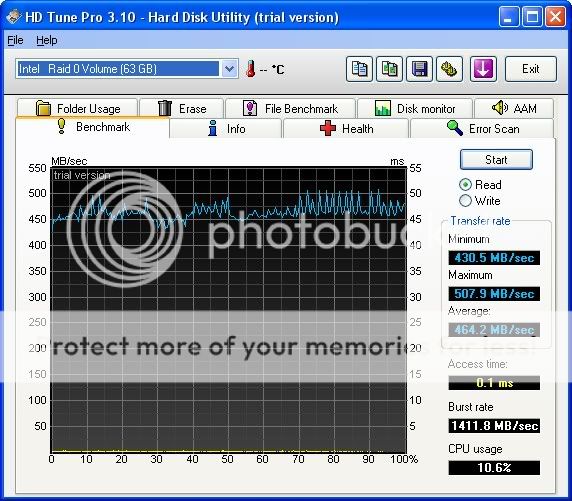

    Also, through practice, it has been found that the actual (practical) cap of the ICH10 is ~660Mb/sec, as stated earlier in the thread. For example, three X25-M's that could in theory perform 3*250Mb/sec=750Mb/sec, are capped at:


    A) And who told you that I haven't been in the Intel site researching? Hence my question earlier, on "how much does a motherboard manufacturer have to stick to the reference design of the chipset manufacturer?".
    B) I couldn't care less about Asus' reputation at this point. If this was the subject of my thesis, I would be sending polite emails to Asus and I would be patiently awaiting for their feedback. However, there is a $300-thin line between "asking" and "demanding/being entitled to".
    I had problems with Asus motherboards in the past, and all I did was to send an email to their product support team and wait forever for a dry answer like "We don't support RAID controllers on the PCI-E x16 slots" and the solution so far was always simple yet expensive: get rid of it and buy/try a new board.


    And bad products cost consumers lost money, what is your point? That I should shut up and don't dare accuse the mega-company for a product with a major flaw? This is not how it works mate.
    The root-cause behind this performance degradation is unknown to me, and I am making assumptions based on all the information that I come across; the performance degradation of the "new and improved" product though, is a fact whether they (Asus) like it or not (I certainly don't).

    Back on the subject now, I will assume that your criticism had good intentions and you were not just trying to contrast your expertise against my very basic knowledge on the subject, but the fact remains that in theory it all works lovely and in an identical way between the P45's and the X58's implementations of the ICH10, but in practice there is a performance drop between 40% (transfer rates) and 500% (small reads/writes) and I think that all involved stakeholders should be aware of it, both Asus and the consumers who spend their money hoping on an "upgrade".
    Any objections on that?
    I apologize for coming across so harsh, the intention of my post was supposed to come across as helpful! It was pretty late when I wrote it after all. All I meant to say was the topic of the original post was that it might come across as Asus did it in on purpose to hurt the customer, when actually they didn't and it's a problem they aren't sure of or know what they did wrong to cause it. On the other hand too, there are many wildfires spread around Internet forums by guys who assume because they see something that doesn't seem right, those "experts" don't bother researching and just throw accusations and rumours around which hurt companies if they are false. As long as you did your research I respect that, just need to be a little more what would you call it, "diplomatic" about such a thread title

    I agree there is a performance drop but what attributes to it is beyond me. I've seen similar on all Asus boards where the ICH is capped to bandwidth, and read/writes are up and down. Some vendors have solid performance on their boards, and there is no explanation really.

    There are two reasons that come to mind that could be the cause of it.

    1) Design problem they overlooked when they were too busy making the boards overclock for WRs.

    2) Bios problem either on part of American Megatrends (AMI) or Asus. Now this seems more likely to be a problem. PCI / Port routing is controlled by bios code, also IRQ allocation. If the shared IRQ the ICH is on somehow restricts its performance because the other device/s on same IRQ hinder it by hammering out too many requests on the port its through routed through that could be fixed by routing tables in bios. There is also the case of MSI/MSI-X (messaged signal interrupts) which is a higher level protocol allowing overlap and bus scheduling on shared interrupt ports, typically an IRQ requests a lock on bus and no other devices can use the bus during this interrrupt, until the requesting device releases the lock, so not being made correctly or handled right can result in seriously degrading performance. I'd hate to think of all the other reasons that may cause this degradation too, it's painful!

    I think Asus really need to sit down with AMI about the core bios code and figure this problem out, whether its software (bios) or their hardware design.

    If it's AMI's fault then they can work together to resolve it, or if its Asus engineers misunderstanding of AMI core bios implementation I'm sure AMI would be happy to help them figure the problem out too. This is resolvable at least and would show good will to the customers if they really sorted it out, provided it's not hardware design level.
    Last edited by mikeyakame; 02-10-2009 at 04:24 PM.

    DFI LT-X48-T2R UT CDC24 Bios | Q9550 E0 | G.Skill DDR2-1066 PK 2x2GB |
    Geforce GTX 280 729/1566/2698 | Corsair HX1000 | Stacker 832 | Dell 3008WFP


Bookmarks

Bookmarks

Posting Permissions

  • You may not post new threads
  • You may not post replies
  • You may not post attachments
  • You may not edit your posts
  •
