MMM
Results 1 to 25 of 272

Thread: Official Water Cooling Thread of the Stock Maximus SE ROG NB Club:

Hybrid View

  1. #1
    I am Xtreme
    Join Date
    Jul 2005
    Posts
    4,811
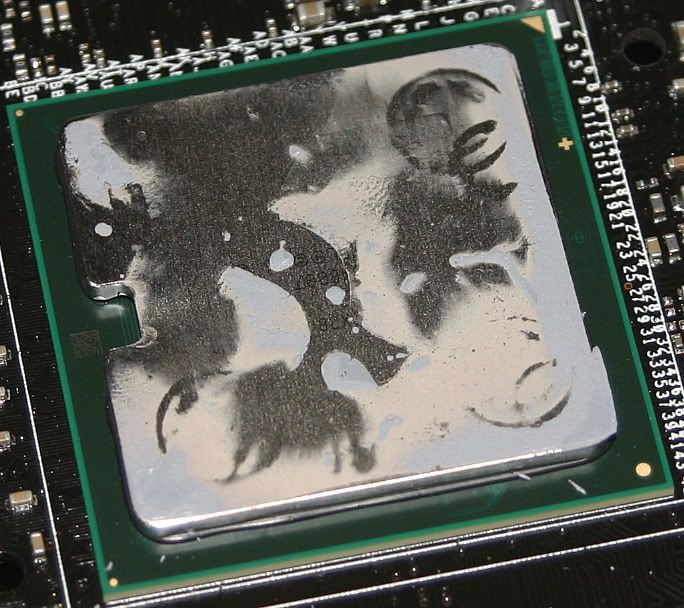
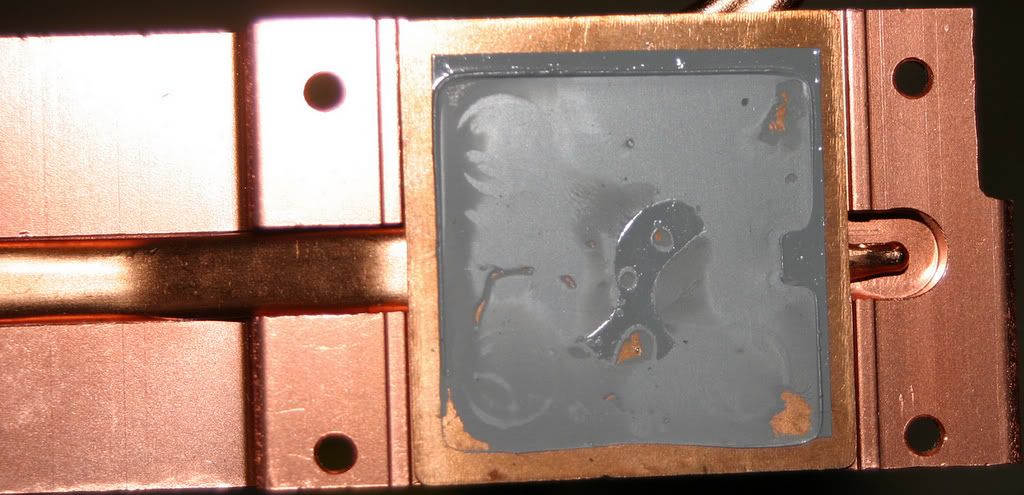
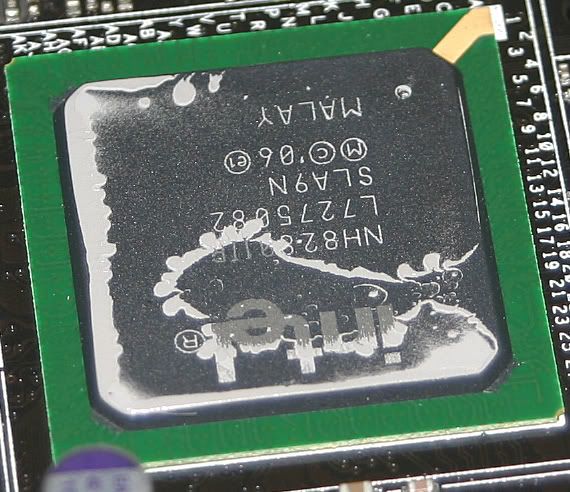
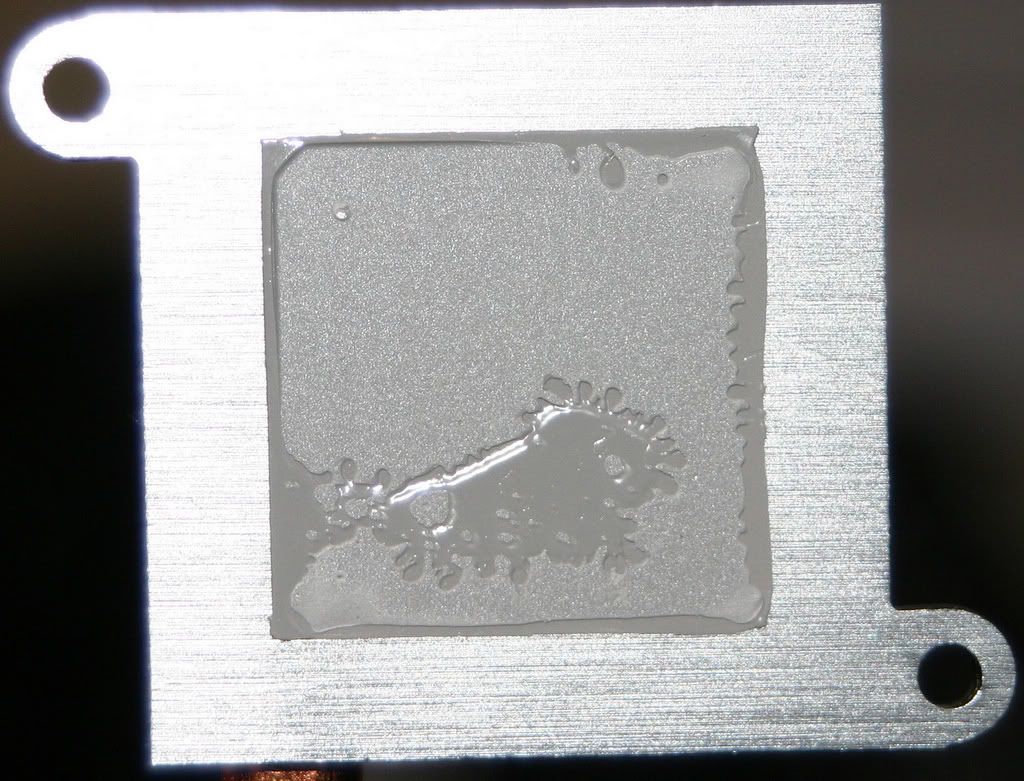
    Below are some pics showing the removal of the N/S bridge heat sinks. With the help of cadaveca I came up with the idea of refrigerating the Maximus Formula MB (with the plastic covering)for 3 hours in order to remove the north/south bridge heat sinks. Heat didn't loosens the thermal compound found on this motherboard for me but cold temperatures did. Once the board was chilled for 3 hours the north/south bridge heat sinks popped right off without any real force. I offer this advice as a possible solution for removing bonded type of thermal compound from the north/south bridge heat sinks. Please keep in mind that applying either heat or cold or both temperatures can damage your motherboard. You try this at your own risk.


    NB.


    NB HS.


    SB.


    SB HS.

    Sidenote:
    This method is not for everyone and you do so at your own risk.
    Last edited by Eastcoasthandle; 12-06-2007 at 11:28 AM.
    [SIGPIC][/SIGPIC]

  2. #2
    Xtreme Addict
    Join Date
    Oct 2007
    Posts
    1,012
    Quote Originally Posted by Eastcoasthandle View Post
    It's not heat that loosens the thermal compound found on this motherboard but cold temperatures. Once the board was chilled for 3 hours the north/south bridge heat sinks popped right off without any real force. I offer this advice as a possible solution for removing difficult north/south bridge heat sinks do to the type of thermal compound used. Below are some pics I took to show what the TC, heatsinks and chipset looks like after removal.
    Just for the beginners: condensation could kill the board, so be carefull. Also, I won't be surprised if later you can get some oxydation on valuable components with such a process. Heat is more "physiological", as the board heats up on load. But, good idea for a really recalcitrant heatsink (anyhow, a really good heating would do it in all cases, just could need time)
    Q6600 G0 L740B126 Lapped, 2x1Gb Kingston HyperX DDR2-1200
    Gigabyte 8800 GTS 512Mb OC 756-1890-1000
    TT Toughpower 750 W (W0116) new 8xPCI-E Rev.
    Western Digital Caviar SE16 WD6400 AAKS rocks
    WC: Swiftech H2O-Apex Ultra 220 GT + PA120.3 5v
    OCZ XTC RAM Cooler, HR-05 IFX + 80mm FAN (NB), 2x HR-09U type 2 (mosfets), Modded Zalman ZM NB-47J (SB), Arctic-Cooling MX-2
    Vista 32 bits
    ------------
    - ASUS P5K Premium bios 0612: (3.84GHz 8x480) @1.432v


    ------------
    - P5B Deluxe: 3.60GHz (9x400) @1.33v *** Old Setup (P5B deluxe)

    OCCT 2.x Final Download

  3. #3
    I am Xtreme
    Join Date
    Jul 2005
    Posts
    4,811
    Quote Originally Posted by jonny_ftm View Post
    Just for the beginners: condensation could kill the board, so be carefull. Also, I won't be surprised if later you can get some oxydation on valuable components with such a process. Heat is more "physiological", as the board heats up on load. But, good idea for a really recalcitrant heatsink (anyhow, a really good heating would do it in all cases, just could need time)
    No, there is nor will be any oxidation on valuable components. The results were perform to mimic outdoor results when under deliver (during a cold day). Although I wouldn't suggest this with everyone, an alternative was needed because the heat method did not work for me. The fact that it did work (under close observations, understanding of the cold air in my fridge, placement of the entire box and no condensation) made for an effective alternative for removing the N/S bridge HS that otherwise would not come off.
    Last edited by Eastcoasthandle; 12-02-2007 at 02:55 PM.
    [SIGPIC][/SIGPIC]

Bookmarks

Bookmarks

Posting Permissions

  • You may not post new threads
  • You may not post replies
  • You may not post attachments
  • You may not edit your posts
  •