Quote Originally Posted by Hans de Vries View Post
1) JF told you at the other thread that IPC is higher.

2) If that's true then the higher frequency design comes on top of that.

3) And last but not least: Power gating Turbo now allows much higher single core frequencies.


Looks like a 1-2-3 speed bump for single thread performance to me....


Regards, Hans
I've been spending some time thinking about client loads on BD. Improving per core power consumption & max frequency required significant rethinking of the x86 pipeline and we will see these differences play out as changes in IPC performance across workloads. Outside of desktop these are necessary to improving mobile performance and battery life which in my view will remain a consumer-felt issue for decades to come. I think of the smartphone and tablet like the original IBM PC. We've just begun.

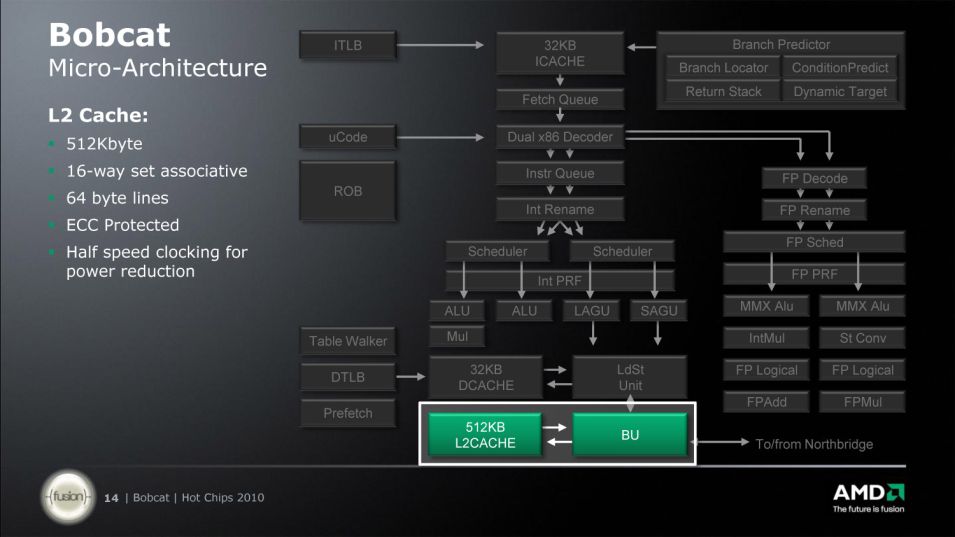
Bobcat will bring x86 and the performance of the PC experience - multi-tasking, web experience, media processing, standards-based connectivity - to ultra mobility and appliance computing. My biggest concern for Bobcat is the application environments for some of the potential form factors. I want Bobcat and its descendants in an alarm clock, but I want an application environment well suited to an alarm clock. Voice, remote gesture, intelligent agency, handheld graphics need an application environment built around them, not extending to them. Sitting down and using this platform was an interesting experience because I found myself pushing it around in all the wrong ways - it wants to live in a small ultra-mobile device or a specialty client and to do things suited to those form factors. With novel IPC/TDP combinations I am hopeful for form factor and usage innovation.